
Innovation Is Our Middle Name

Network Innovation Solutions Blog

Network Innovation Solutions Blog

Network Innovation Solutions has been serving the Huntington area since 2013, providing IT Support such as technical helpdesk support, computer support, and consulting to small and medium-sized businesses.

Why "It Looked Legit" Is How Most Cyber Incidents Start

Modern cyberattacks 400Think about your morning routine. You sit down with your coffee, open your inbox, and start clearing out the noise. Among the newsletters and internal updates, you see an urgent notification: a vendor invoice is overdue, a cloud storage subscription failed to renew, or a major shipping provider needs you to confirm delivery details.

The branding looks correct. The email address seems familiar. You click the link, log in to resolve the issue, and move on with your day.

Minutes later, a silent crisis begins.


In the world of modern cybersecurity, attackers rarely hack their way into small and medium-sized businesses (SMBs) through complex software vulnerabilities. Instead, they simply log in. They do this by convincing smart, busy professionals to hand over the keys.

The Evolution of the Deceptive Email

Gone are the days when cyberthreats were easy to spot. We all remember the era of the "Nigerian Prince" scams or emails riddled with obvious typos, broken English, and sketchy attachments. Today's tactics are highly sophisticated, engineered specifically to bypass both technical filters and human suspicion.

Modern social engineering attacks—often referred to as business email compromise (BEC) or spear phishing—rely on psychological manipulation rather than technical wizardry. Attackers research your company, map out your vendor relationships via public data or LinkedIn, and create highly targeted, context-aware messages.

They don't need to look like an obvious criminal; they just need to look legit.

Why SMBs Are the Primary Target

A common misconception among business owners is: "We are too small for hackers to care about."

In reality, small and medium-sized businesses are the sweet spot for cybercriminals. Large enterprises invest millions in dedicated, around-the-clock security operations centers. SMBs, however, often operate with lean internal teams where employees wear multiple hats. A busy HR manager or accounting clerk is juggling dozens of tasks a day—making them far more susceptible to a well-timed, urgent request.

The risks of a single employee clicking the wrong link are no longer limited to a slow computer. Today, a successful credential theft can lead to:

  • Financial Fraud: Attackers intercepting wire transfers or diverting legitimate vendor payments to fraudulent accounts.
  • Ransomware: Total operational paralysis as business data is encrypted and held for ransom.
  • Reputational Damage: If an attacker gains control of your email system, they will use your legitimate domain to launch attacks on your clients, permanently fracturing hard-earned trust.

Building a Culture of Verification

Technology is vital, but even the most advanced AI-driven email filters cannot stop every single threat. The final line of defense is always the person sitting at the keyboard.

Shifting your business from a posture of vulnerability to one of resilience doesn't require turning your employees into cybersecurity experts. It requires shifting the cultural norm from implicit trust to healthy skepticism.

1. Normalize Out-of-Band Verification

If an email requests a change in payment details, sensitive data transfer, or urgent credential verification, establish a strict policy: Verify via a secondary channel. Call the vendor using a known phone number (not the number listed in the suspicious email) or ask a colleague across the room. A 30-second phone call can save a business hundreds of thousands of dollars.

2. Move Past "Once-a-Year" Training

Cyberthreats evolve weekly. Sending out a dense, compliance-driven training video once a year does not change behavior. Effective security awareness involves continuous, bite-sized education and simulated testing that mimic real-world scenarios, helping employees keep security top of mind in their daily routines.

3. Implement Guardrails That Reduce Human Error

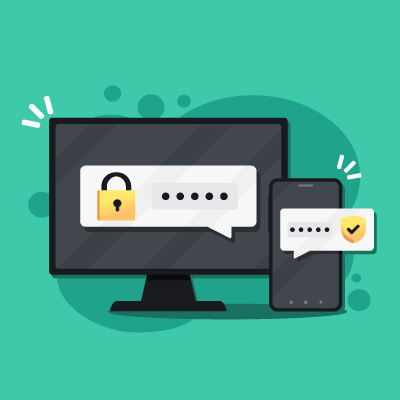
We cannot expect perfection from humans 100% of the time. People get tired, distracted, and stressed. That’s why technical guardrails must exist to catch mistakes. Implementing robust Multi-Factor Authentication (MFA), strict conditional access policies, and automated endpoint protection ensures that even if a password is accidentally surrendered, the attacker still cannot breach the environment.

Securing Peace of Mind

Managing the intersection of human behavior and digital security can feel overwhelming for a growing business. It requires balancing strict protections with operational efficiency so your team can actually get their work done.

This is where having a strategic IT partner becomes invaluable. True cybersecurity isn't about buying a piece of software and hoping for the best; it's about designing an ecosystem where advanced technical layers, proactive monitoring, and continuous human education work in tandem. When your defensive posture is structured correctly, it lifts the burden of constant worry off your shoulders, giving you the clarity and freedom to focus entirely on scaling your business.

Concerned about your business' vulnerability to sophisticated phishing or social engineering cyberthreats? Reach out to our team today for a comprehensive security assessment.

0 Comments
Continue reading

How Multi-Factor Authentication Works

497256231 mfa 400


Unfortunately, the number of cyberattacks is consistently growing and many of those attacks target business end users. This means that any account that requires a password for access could conceivably be compromised should attackers gain access to its credentials.

What Are the Best MFA Practices?

To protect against these threats, businesses must adopt intuitive security strategies to secure user accounts. Multi-factor authentication (MFA) or two-factor authentication (2FA) is one of the most effective methods to enhance account security. MFA adds an additional layer of security by requiring users to verify their identity in more than one way. This approach addresses the vulnerabilities of the traditional login method, such as phishing attacks, brute force attacks, and other advanced hacking techniques that can compromise credentials. 

However, MFA mitigates these risks by requiring another form of authentication. Best practices for implementing MFA include ensuring it is enabled across all critical accounts, regularly updating the authentication methods, and educating users on safe practices. These are things that Network Innovation Solutions does on behalf of all our Managed Service Customers

Understanding Authentication and How MFA Works

Authentication is the process of verifying the identity of a user or system. It ensures that the person or entity requesting access is who they claim to be. MFA works by combining two or more of the following factors to verify identity:

  • Something you know, such as a password or PIN.
  • Something you have, like a hardware token, mobile device, or secure 2FA key.
  • Something you are, including biometric data like fingerprints or facial recognition.

By distributing the authentication process across multiple factors, MFA significantly reduces the likelihood of unauthorized access.

Hardware Tokens and the Most Secure 2FA Keys

Hardware tokens and secure 2FA keys are essential for organizations looking to implement the most secure form of MFA, or ones that don't want their employees using personal devices for business use. Unlike soft tokens, such as mobile apps, hardware tokens operate independently of personal devices, reducing the risks associated with compromised smartphones or SIM-swapping attacks. 

That is why we recommend Cisco Duo, which offers hardware tokens that can be used across multiple platforms, ensuring seamless authentication for email, remote desktops, and other critical applications. They are also some of the most secure 2FA keys because they are FIDO2-compliant and provide robust encryption, making them resistant to phishing and man-in-the-middle attacks.

MFA for Office 365

Microsoft recently announced significant changes to email security by requiring MFA authentication for Office 365. Beginning in early 2025, MFA will be mandatory for all Office 365 accounts, and we predict that this will soon be something all companies implement in the near future. So, contact us today and learn why NIS recommends Cisco Duo as it is one of the most secure, robust, and easiest-to-use MFA platforms currently on the market.

Let’s Improve Your Business’ Security Together!


0 Comments
Continue reading

3 Ways Hackers Use Your Employees To Their Advantage

hackedCyber criminals don’t just slip into your network with the help of some serious hacking skills.  In fact, there’s a much simpler way to do that... through your employees. 
Social engineering is a tactic hackers are using more and more frequently to infiltrate systems.  It involves a variety of approaches that focus on manipulating employees to drop standard security protocols.  And if you expect to protect your data these days, then you’ll have to take the necessary steps to educate and train your employees on how to detect and avoid these approaches. 

0 Comments
Continue reading

When it Comes to Security, Two Factors are Better Than One

step_authentication

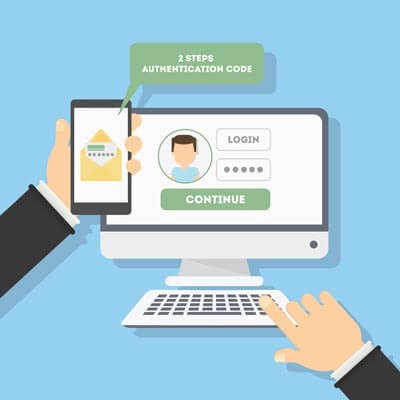
The password isn’t nearly as secure as it used to be. Hackers have begun to take advantage of extremely powerful solutions designed to brute force their way into accounts by using software to rapidly guessing thousands of passwords per second, making it extraordinarily difficult to prepare yourself for them.

What’s the best way to guarantee that passwords aren’t going to be the downfall of your company? A great start is by taking a close look at password best practices and two-factor authentication.

0 Comments
Continue reading

Knowing, and Planning For, Your Organization’s Compliance Burden

compliance_burden

Despite what detractors say, regulations are in place for good reason. They typically protect individuals from organizational malfeasance. Many of these regulations are actual laws passed by a governing body and cover the entire spectrum of the issue, not just the data involved. The ones that have data protection regulations written into them mostly deal with the handling and protection of sensitive information. For organizations that work in industries covered by these regulations there are very visible costs that go into compliance. Today, we look at the costs incurred by these organizations as a result of these regulations, and how to ascertain how they affect your business.

0 Comments
Continue reading

How to Avoid Becoming the Next Data Security Cautionary Tale

security_cautionary_tal_20220905-110324_1

Data security isn’t a matter to be taken lightly, as too many businesses have found out the hard way. Unfortunately, there are far too many simple ways to correct common security issues - enough that it’s foolish not to do so. We’ll review a few ways to fix security issues, after discussing one of, if not the, most egregious security failings in modern history.

0 Comments
Continue reading
Free Technical Business Review

Network Innovation Solutions strives to provide the best comprehensive IT, Computer, and Networking services to small businesses. We can handle all of your organization's technology challenges.

Contact Us
Contact Us

Learn more about what Network Innovation Solutions can do for your business.

243 Cedar Crest Dr.,
Huntington, West Virginia 25705

Call us: (304) 781-3410

News & Updates
  NIS attended the West Virginia Cybersecurity Expo at Mountwest CTC April 17. We were honored to be invited to be included. We had a chance to meet with additional industry experts and future colleagues. The expo’s mission is to educa...